Guides
New York Conference Organizer Budgets: Ask Before Signing
Before you sign a New York conference, ask the Javits Center, the trades, the hotel and your accountant what sets the budget, and get answers in writing.
What to take away
- Ask the venue for a cost sheet, not a rental priceJavits Center costs bundle space, rigging, utilities, cleaning, security and labor.
- Ask the trades for rate cards and minimum call times in writing, because a four-hour call may be billed as eight.
- Ask the hotel for the all-in nightly rate with every tax and fee named.
- Ask your accountant which conference services are taxable in New York before registration opens.
- Keep the written answers on one checklist and compare them before you sign.
Questions for the venue
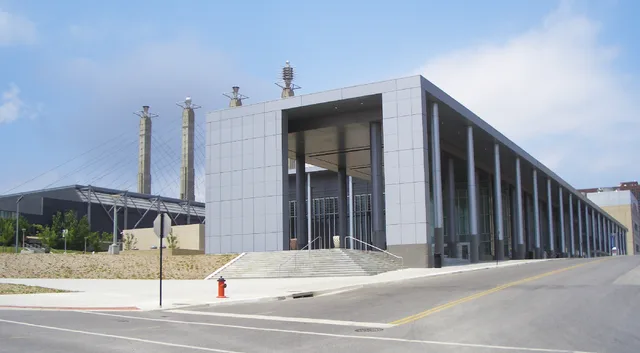
Start with the cost sheet. The Javits Center is the largest purpose-built convention facility in New York, and its cost structure is not a single rental number. It combines exhibit hall or meeting room rental, rigging, utilities, cleaning, security and labor.
Who performs the rigging and electrical work?

Rigging and electrical work at Javits are performed by union trades under the facility's work rules. You cannot bring your own crew for those tasks. That means the labor line is set by the venue, not by your vendor negotiations, so ask for the scope and the hours in writing.
What are the catering rules?
Catering is exclusive or limited to approved contractors, and service charges and gratuities are added on top of menu prices. A plated lunch for 500 can cost more than the meeting room itself. Ask which contractors are approved and which charges sit above the menu price.
Compare the answer with the usual food and beverage share of a conference budget before you accept the first figure.
How are move-in and move-out days billed?
Move-in and move-out days are billed. If your freight arrives early or your booth stays late, you pay for the extra hours. Ask for the billing hours of each day and build them into the schedule before you sign.
Sound, lighting and staging bring their own hours, and the conference AV cost estimator breaks them into lines you can compare with the venue's sheet.
Questions for the union trades
Ask every trade for its rate card and its call rules. Union labor touches every task in the building: electrical, rigging, plumbing and freight handling. In New York venues, stagehand, rigging and freight work is typically handled by union locals such as IATSE and the Teamsters.
Each trade has its own rate card and its own call rules. Union labor rates in NYC are higher than in most US cities. The gap comes from wage scales, benefits and work rules such as minimum call times, so a four-hour call may be billed as eight.
A simple example shows the effect. Suppose your AV setup needs two electricians for a six-hour call. At a non-union market rate of $65 per hour, that is $780. Under a union call with a four-hour minimum per worker and a higher hourly rate, the same job can exceed $1,500 before taxes and fees.
That difference repeats across every booth, every screen and every lighting cue. For a 5,000-attendee finance conference, labor alone can move the budget by six figures.
| Question to ask | Why it matters | Get in writing |
|---|---|---|
| Which trade handles this task? | Each trade has its own rate card | Trade, hourly rate, call rule |
| What is the minimum call? | A short call may be billed as a longer one | Minimum hours per worker |
| What can we control? | You set scope and hours, not the rate card | Scope and schedule for each task |
If you price this work for a client, pass the costs through as separate line items rather than absorbing them into a flat fee. The pay rates and labor costs guide covers the planner's own payroll side.
Questions for the hotel
Ask the hotel for the all-in nightly rate. New York City hotel taxes are charged on the room rate and added to the guest bill. Three taxes and one fee apply to hotel room rentals, and the whole load applies to every occupied room night in your block.
The city lists them as the Hotel Room Occupancy Tax, New York State sales tax, New York City sales tax, and the New York State hotel unit fee of $1.50 per unit per day.
What is the city's share, and who is exempt?
The city's own share is the largest single piece. The Hotel Room Occupancy Tax rate is 5.875%, in effect since December 20, 2013, and the tax is based on the cost of the room. Hotel operators collect it from guests and turn it over to the Department of Finance.
Not-for-profit corporations formed and used exclusively for religious, charitable or educational purposes are exempt. That matters if your client is an association rather than a company, so ask early which one the contract names.
How are resort fees and meeting rooms taxed?
Resort and destination fees do not escape the tax. The Department of Finance's guidance for hotel operators lists a resort or destination fee as part of rent for occupancy, so it is taxed with the room.
Meeting room and banquet room revenue is handled case by case, which is one more reason to ask for the tax treatment of each line in the hotel contract.
What does the tax do to the room block?
For a conference organizer, the practical effect is that the attendee pays more per night, and the room block becomes harder to fill. When the all-in nightly cost rises, some attendees shorten their stay or book outside the block.
That matters because attrition clauses are based on the block, not on the citywide rate. If your block underperforms, you owe the difference even though the tax, not your program, caused the drop.
What can you negotiate?
Ask the hotel to quote the all-in rate, including taxes and any destination or occupancy fees, before you sign. Then publish that all-in figure in your registration materials so attendees can compare fairly.
Negotiate the attrition threshold with the tax in view. If the all-in rate is high, ask for a lower pickup requirement or a wider cutoff date.
Consider a smaller block and a larger room list. A smaller block reduces your exposure, while a room list still gives attendees a discounted rate.
Questions for your accountant on sales tax
Ask which of your conference services are taxable. New York State sales tax rules for conference services are not one rule. They depend on what you sell and how you bill it, so the answer needs to cover tickets, catering and AV separately.
Admissions to a conference can be taxable when the event is commercial and not exempt. Admission charges to places of amusement in New York State carry the state sales tax of 4% plus the applicable local sales tax based on where the event is held, per New York State admissions tax guidance.
Catering is generally taxable, and audio-visual rentals, equipment and some services are taxable in specific cases. Ask your accountant to mark each line of the budget as taxable, exempt or case by case.
The local add-on is what makes New York City expensive. In the city, sales and use tax rate is 8.875 percent: the New York City local rate of 4.5 percent, the New York State rate of 4.0 percent and the Metropolitan Commuter Transportation District surcharge of 0.375 percent.
Every taxable line in a Manhattan conference, from tickets to catering, carries that combined rate. Exemptions exist for certain educational, charitable or government events, but they must be documented. Do not assume your finance conference qualifies.
The New York State Department of Taxation and Finance publishes the controlling guidance in its Sales and use tax publications. Read the sections on admissions and amusement charges before you set registration prices, and file the tax you collect with the department on Form ST-100.
A worked example
Take a one-day media conference with 400 paid attendees at $500 each. Registration revenue is $200,000. If admissions are taxable at the New York City combined rate, the tax is collected on top of the ticket price and remitted to the state.
Now add catering at $60 per person, or $24,000, plus AV rental at $15,000. Both may be taxable depending on the contract. The tax base is not just the ticket.
If you fail to collect and remit, the liability stays with your business. The IRS treats unpaid sales tax as a trust fund obligation, and the SBA advises new businesses to separate collected tax from operating cash.
Build the tax into your pricing model from the start, not after registration opens.
The written answers to collect
Industry groups such as the Event Industry Council, Meeting Professionals International and the Professional Convention Management Association publish benchmarks, but they do not set prices. Your own line items decide the total, so keep each answer where the budget can see it.
- Build a line-item budget that separates venue, labor, catering, AV and tax.
- Confirm union work rules at Javits and at every hotel you shortlist.
- Get all-in hotel rates, including taxes and fees, in writing.
- Ask your accountant which of your conference services are taxable in New York.
- Add a contingency of at least 10 percent for labor and tax surprises.
- Venue cost sheet includes rigging, utilities, cleaning and security.
- Union labor rates and minimum call times are in writing.
- Hotel quote shows the all-in nightly rate with taxes and fees.
- Attrition and cutoff terms match your realistic pickup.
- Sales tax treatment is confirmed for admissions, catering and AV.
- Contingency line covers labor and tax exposure.
- Registration pricing reflects the all-in attendee cost.
If a second city is on the shortlist, the Chicago budget structure shows how another union venue and a stacked hotel tax change the units you budget in.
Common questions
Which question should come first?
Ask the venue for its cost sheet. Javits costs bundle space rental, rigging, utilities, cleaning, security and labor, so a rental price alone understates the facility line.
Can I avoid union labor rates at the Javits Center?
No. Rigging, electrical and similar trades are performed by union workers under the facility's rules. You can control the scope and hours, but not the rate card.
Does New York sales tax apply to conference registration fees?
It can, when the event is commercial and no exemption applies. Catering and AV rentals may also be taxable. Check the state guidance and confirm your specific case with an accountant.
How do New York City hotel taxes affect my room block?
They raise the all-in nightly cost, which can reduce pickup and shorten stays. Attrition is still measured against your block, so a high tax can create a bill you did not plan for.
What is the single biggest line to watch?
Labor. It touches setup, AV, rigging and catering service, and it is set by union rules rather than by competitive bidding.