Guides
The starter equipment list for a corporate event planning business in 2027
A corporate event planning startup needs registration, AV, power and travel gear before its first contract. Here is what to buy, rent or borrow.
What to take away
- This starter equipment list for a corporate event planning business puts registration, credentials and money first; rent the rest until a service line repeats three times.
- A two-person startup can open with a laptop, a badge printer, a scanner, a power bank and a label maker for under the cost of one hotel AV day rate.
- Rigging, power distribution and crowd barriers are rented or subcontracted, never owned, because they carry engineering and fire-code duties.
- Track every asset by serial number, assigned user and condition, and keep purchase records the way the IRS expects.
- Price the kit into the proposal as a line item, or the margin disappears at reconciliation.
This article covers business equipment and setup decisions. It is not legal, tax, safety or engineering advice. Name your own authority for each: a licensed CPA for tax treatment, qualified counsel for contracts and insurance, the local fire marshal and licensed engineers for rigging, power and occupancy.
What a corporate event actually requires
A corporate event runs through a longer chain than most founders plan for. The chain includes:
Corporate Event Planning Chain
- Brief
- Qualification
- Budget
- Proposal
- Contract
- Venue sourcing
- Supplier bids
- Registration
Equipment sits inside that chain, not beside it.
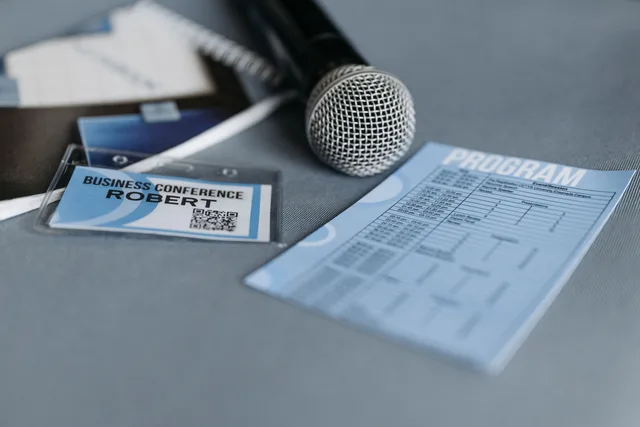
Registration and credentials are where the first money lands. A badge printer, a barcode scanner and a laptop that can run the registration platform are the minimum. Everything else can be borrowed for event one.
The Bureau of Labor Statistics describes meeting, convention and event planners as defining purpose, attendance, time, location and cost. They then solicit bids, inspect venues, coordinate services and review bills. Each of those steps has a tool attached.
The starter list, by name
These are the items a two-person corporate event planning firm can put into service in 2027 without a warehouse. Prices are typical US list or street figures as of 2026. Rental rates are what most markets quote per item, per day.
Starter Equipment: Buy, Rent or Borrow
Buy
- Brother QL-820NWB
- Yes
- Zebra ZD421
- After event three
- Socket Mobile S700
- Yes
- Honeywell 8680i
- No
- Anker 737 power bank
- Yes
- Anker SOLIX C1000
- No
Rent
- Brother QL-820NWB
- No
- Zebra ZD421
- No
- Socket Mobile S700
- No
- Honeywell 8680i
- Yes
- Anker 737 power bank
- No
- Anker SOLIX C1000
- Yes
Borrow
- Brother QL-820NWB
- No
- Zebra ZD421
- No
- Socket Mobile S700
- No
- Honeywell 8680i
- Yes
- Anker 737 power bank
- No
- Anker SOLIX C1000
- No
| Item | What it does | Buy, rent or borrow |
|---|---|---|
| Brother QL-820NWB label printer | Prints attendee badges and box labels on site; typically $200 to $250 | Buy |
| Zebra ZD421 thermal printer | Higher-volume badge and credential printing; typically $450 to $700 | Buy after event three |
| Socket Mobile S700 scanner | Scans QR and barcode credentials at check-in; typically $300 to $390 | Buy |
| Honeywell 8680i wearable scanner | Hands-free scanning for load-in and inventory; typically $800 to $1,000 to buy, or $60 to $90 a day to rent | Rent or borrow |
| Anker 737 power bank | Keeps phones and scanners alive through load-in; 24,000 mAh, typically $130 to $150 | Buy |
| Anker SOLIX C1000 portable station | Runs a check-in desk away from wall power; 1,056 Wh, typically $700 to $1,000 to buy, or $80 to $120 a day to rent | Rent |
| Ubiquiti UniFi Express access point | Stands up a private network when venue Wi-Fi fails; typically $150 | Buy |
| TP-Link Omada EAP225 access point | Backup AP for breakout rooms; typically $60 to $70 | Buy |
| Shure MX418 gooseneck microphone | Panel and podium pickup; typically $300 to $400 to buy, or $25 to $40 a day to rent | Rent |
| Shure ULXD wireless handheld | Presenter audio where cable runs are impractical; typically $1,200 to $1,800 a channel to buy, or $100 to $150 a day to rent | Rent |
| Rode Wireless GO II kit | Interviews, hybrid sessions and backup audio; typically $299 | Buy |
| Blackmagic ATEM Mini Pro switcher | Switches camera and laptop feeds for hybrid sessions; typically $295 to $395 to buy, or $100 to $200 a day to rent | Rent |
| Logitech Rally Bar | All-in-one camera and audio for a hybrid room; typically $3,000 to $4,000 to buy, or $200 to $400 a day to rent | Rent |
| Manfrotto 290 tripod | Camera and light stands; typically $150 to $220 | Buy |
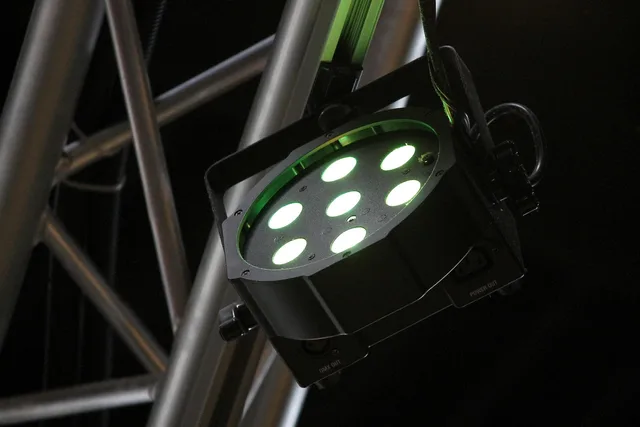
| Chauvet DJ GigBAR Move | Wash and effect lighting for a stage edge; typically $600 to $700 to buy, or $75 to $125 a day to rent | Rent |
| Cable ramp and matting | Covers cable runs in walkways; typically $150 to $400 a section, nearly always rented | Rent |
| Pelican 1615 Air case | Ships and stores the kit without damage; typically $400 to $550 | Buy |
| Brother P-touch PT-D610BT | Labels cases, cables and venue boxes; typically $100 | Buy |
| Apple MacBook Air 13-inch (M4) | Runs the registration platform, proposals and reconciliation; typically $999 and up | Buy |
| Motorola DLR1020 two-way radio | Crew comms across the floor and the dock; typically $200 to $250 each | Buy |
| Rock-N-Roller R2RT cart | Moves cases from the dock to the room; typically $150 to $220 | Buy |
| Pro Gaff gaffer tape, 2 inch | Secures cable runs and signage; typically $25 a roll | Buy |
Nothing here is exotic. Each item answers a moment in the workflow: check-in, hybrid delivery, load-in, or the trip home. Registration software sits outside the equipment list. Eventbrite charges per paid ticket, while Cvent and Swoogo quote annual contracts.
Buy, rent or subcontract
The decision is frequency, not price. A scanner used at every event pays for itself in two seasons. A lighting bar used twice a year does not.
Buy or Rent Decision
Is annual rental spend times years of use lower than purchase price plus storage, insurance, maintenance and resale?
Keep renting
Buy
Rigging, truss, motors, power distribution and crowd barriers go to licensed contractors. Those carry engineering stamps, load calculations and fire-code duties that a planner cannot absorb. The local fire marshal and a licensed engineer set those requirements.
The arithmetic is simple. Take annual rental spend on an item, multiply by the number of years you expect to keep using it, and compare that with purchase price plus storage, insurance, maintenance and the resale value at the end. If the rental total is lower, keep renting.
National AV rental houses, including PRG and Encore, publish per-item daily rates. A hybrid-room camera bar runs $200 to $400 a day in most markets. A wireless handheld channel runs $100 to $150. Three days of either can beat the purchase price.
For a worked comparison of the two paths, see the new versus used equipment cost guide. It walks the same arithmetic with storage and downtime included.
Records, custody and tax treatment
Every asset gets a serial number, an assigned user and a condition note at check-in and check-out. A shared spreadsheet works until the kit passes ten items. Past that, Airtable or Cheqroom hold the log better than a sheet.
Asset Records and Tax Treatment
- Assign serial number to every asset
- Record assigned user
- Note condition at check-in and check-out
- Keep purchase receipts with asset
- Keep warranty papers with asset
- Keep repair history with asset
- File 1099-NEC for vendor payments above threshold
The IRS recordkeeping guidance sets out what a business should retain: income and expense records, purchase documents, payroll records and asset records. Keep purchase receipts, warranty papers and repair history with the asset, not in a separate folder.
Vendor payments above the reporting threshold go on a 1099-NEC. Confirm the current threshold and your filing duty with a licensed CPA, not with a template.
Safety and emergency planning
OSHA's emergency preparedness guidance covers these topics:
OSHA Emergency Preparedness Topics
- Reporting
- Evacuation
- Accountability
- Rescue duties
- Contacts
- Training
- Plan review
An event site is a workplace for your crew, so the plan applies to them.
OSHA's safety management guidance recommends finding and fixing hazards before an injury or inspection exposes them. For a planning firm that means a written pre-event walk of the load-in path, the power drops and the crew rest area.
Do not write your own crowd management, rigging or electrical procedure. The venue, the fire marshal and certified safety professionals own those. Your job is to confirm the plan exists and that your crew has been briefed.
Setup for the first event
First Event Setup Steps
- Confirm venue power, network and load-in rules in writing
- Build kit list from registration and hybrid needs
- Test badge printer, scanner and network at office
- Pack by functioncheck-in, audio, power, spares
- Assign kit owner at load-in and load-out
- Reconcile asset list within 48 hours
Costing the kit into the proposal
Equipment is a line item in the proposal, not an overhead you absorb. Quote it as a daily rate per item, the same way a venue quotes AV.
Equipment Costing and Cash Flow
- 50%Deposit at contract
- 3Event days to cover badge printer at $75/day
- $300Daily rental for camera bar
- 3Monthly metrics to track
A badge printer quoted at $75 a day covers its $200 purchase price by the third event day. A camera bar rented at $300 a day stays a pass-through cost. Quote from your rental invoices, then add storage and insurance.
Track three numbers monthly: gross margin per event, booking lead time, and equipment cost as a share of event revenue. If equipment cost climbs while margin holds, you are renting what you should own. If margin falls while equipment cost holds, the problem is pricing.
Deposits and payment schedules matter here. A 50 percent deposit at contract and the balance before load-in keeps the equipment cash flow positive. Confirm the schedule with your CPA and your insurance broker.
Common questions
What is the single most important item to buy first?
A badge printer and a scanner. Registration is the one moment every attendee touches, and a slow check-in line is the failure a client remembers. A Brother QL-820NWB and a Socket Mobile S700 cover most events under 500 people for roughly $550 combined.
Do I need to own AV equipment?
Almost never at the start. Rent audio, lighting and switching per event until you run more than a dozen a year. Own only the small items that travel in a case and get used every time. The Rode Wireless GO II and the Manfrotto 290 tripod earn a place; the Logitech Rally Bar does not.
How do I handle equipment that arrives damaged?
Photograph it at the dock before signing the carrier's paperwork, note the damage on the delivery receipt, and file the claim with the carrier and your insurer. Keep the asset record updated the same day.
Can I write off the whole kit in year one?
That depends on your entity, your accounting method and current IRS rules. Section 179 expensing and bonus depreciation change most years. Ask a licensed CPA before you assume a deduction. Keep every receipt either way.