Guides
OSHA and ADA compliance costs every US conference organizer must budget
Conference organizer budgets in the US must carry OSHA event compliance costs plus ADA conference accessibility spending. Here is what each line costs.
What to take away
- Conference organizer budgets in the United States need four separate compliance lines: OSHA safety, ADA accessibility, crew training, and the documentation that proves all three. A mid-size show typically spends $6,000 to $18,000 on these items.
- Federal OSHA rules under 29 CFR 1910 apply to event labor, and roughly half the states run their own State Plans with different penalties and inspection habits.
- ADA Title III obligations sit mostly with the hotel or convention center, but organizers sign contracts that push remediation costs back onto them.
- PPE, exit route work and fire extinguisher servicing are usually the smallest dollar items and the largest source of day-of delays. Budget $600 to $1,500 for PPE consumables on a 40-person, three-day build.
- Accessibility spending is cheapest when it is written into the request for proposal, not added after a site visit. A per-attendee allowance of $1 to $5 covers captioning, interpreters and receivers.
What OSHA event safety rules add to venue and staffing budgets
OSHA does not publish a rule called "event safety." It applies general industry standards in 29 CFR 1910 to the people who build, staff and tear down your conference. That is the frame everything else hangs on.
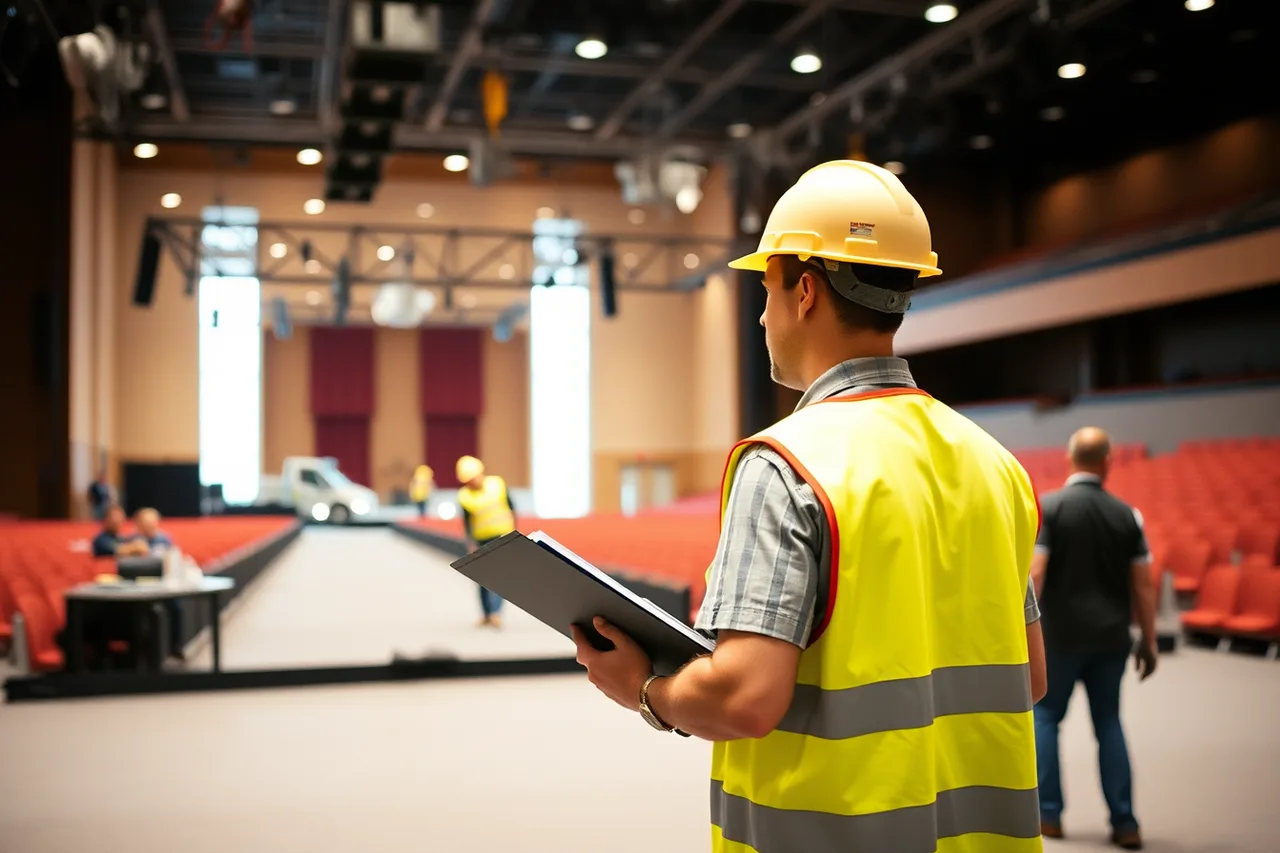
The OSHA laws and regulations that drive compliance costs for event venues and organizers are the same ones that govern warehouses, hotels and restaurants. Your general session hall is treated as a workplace while your crew is in it.
Two cost centers follow. Labor: someone must be competent to identify hazards, and that person costs more per hour than a stagehand. Documentation: written programs, training records and inspection logs a compliance officer can read.
In most US markets, a designated safety lead bills at $65 to $110 per hour. A general stagehand bills $25 to $45 per hour. The premium runs for the full build window.
A single mid-size conference with a 40-person build crew typically needs a designated safety lead for load-in and load-out. Budget that as a premium rate for the full build window, not as a line you fill if a problem appears.
Venues also pass their own compliance costs through. Hotels in California, New York, Illinois and Washington carry higher workers compensation and training loads, and those show up in facility fees and labor call rates. Union labor call rates in those states often run $35 to $70 per hour per stagehand.
If you are new to pricing this, the compliance checklist walks through the documents a first-year organizer should hold before signing a venue contract.
Where the money actually goes
Typical US costs as of 2026 appear in the right column.
| Cost category | Typical trigger | Budget treatment |
|---|---|---|
| Safety lead labor | Build and teardown over 20 crew | Premium hourly rate, often $65 to $110 per hour for the full window |
| Written safety program | Any multi-employer worksite | One-time template $500 to $2,500, plus annual review $500 to $1,500 |
| Training records | New crew, new venue, new rigging plan | Per head, per event, $25 to $75 per person |
| Personal protective equipment | Rigging, staging, electrical, forklift zones | Consumable, $600 to $1,500 per 40-person, three-day build |
| Exit route compliance | Any temporary wall, drape or registration build | Venue review $100 to $500, plus fire watch $35 to $75 per hour |
| Fire extinguisher servicing | Cooking, pyrotechnics, generator use | Rental $25 to $60 per unit, inspection tag $10 to $25 per unit |
| Incident documentation | Any recordable injury | Administrative hours $25 to $50 per hour, plus legal review $250 to $500 per hour |
| Heat illness supplies | Outdoor build or hot exhibit hall | Water and shade $250 to $750 per event |
| Hazard communication | Chemicals, adhesives, fuel on site | Binder $20 to $50, or SDS software $50 to $200 per month |
Multi-employer worksites
When your crew, the venue's crew and an exhibitor's contractor share a floor, OSHA treats each employer as responsible for its own workers and, in some cases, for hazards it creates for others.
That means your budget should include a short safety orientation for every contractor, not just your own staff. Fifteen minutes per contractor, multiplied across a large show, is real money and real schedule. At a $50 hourly loaded rate, 15 minutes across 40 contractors costs about $500.
Contract language matters here. Indemnification clauses that look standard can move a citation's cost onto you. Have counsel read them before the deposit clears, and see the legal and insurance guide for how those clauses interact with coverage.
ADA Title III obligations for hotels and conference facilities
The ADA Title III obligations for hotels and conference facilities used by organizers are non-delegable for the venue but frequently contractable back to you. Read the accessibility section of your venue agreement before you sign it.
Title III covers places of public accommodation, which includes hotels, convention centers, restaurants and any space you rent for a ticketed or public event. The ADA Title III rules set the baseline for physical access, communication access and service animal accommodation.
Physical access is the visible cost: accessible routes, seating, restrooms, stage access and parking. Most large US convention centers built after 1990 are largely compliant. Older hotels and historic venues are where the surprises live. Retrofitting a temporary stage ramp or lift runs $500 to $2,500.
Communication access is the cost organizers underbudget. Captioning, assistive listening systems and interpreter services are per-event expenses, not capital ones, and they scale with session count.
Live captioning runs $100 to $200 per hour. ASL interpreters bill $75 to $150 per hour with a two-hour minimum. Assistive listening receivers rent for $5 to $15 per receiver per day.
Service animal accommodation is usually free and almost always mishandled. Staff need one clear rule: service animals are permitted anywhere the handler goes.
Emotional support animals are not covered by Title III in the same way, and your front-line team needs to know the difference before a registration desk confrontation happens. Training staff on that distinction costs one hour of meeting time.
What organizers typically pay for
Publicly listed and typical US rates as of 2026 appear after each item.
- Accessible shuttle or transport between overflow hotels$75 to $150 per hour per bus with driver
- Assistive listening receivers for every breakout room: $5 to $15 per receiver per day, or $100 to $300 to buy
- Live captioning for the general session and any hybrid stream: $100 to $200 per hour
- ASL interpreters for sessions requested in advance$75 to $150 per hour, two-hour minimum, often two interpreters per session
- Accessible seating dispersed through the room, not clustered at the back: no added cost
- Temporary ramp or lift where a stage has steps$500 to $2,500
- Large-print and screen-reader-ready program materials$0.10 to $0.50 per page extra
Accessible seating placement is the cheapest fix and the most commonly botched. Dispersed seating costs nothing extra. Clustered seating in the rear generates complaints and, in some cases, complaints to the Department of Justice. DOJ civil penalties for Title III violations are adjusted annually and can exceed $100,000 for a first violation.
Reading the venue's ADA language
Venues often warrant that the facility complies with the ADA and then add that the organizer is responsible for accessibility features specific to the event. That second clause is where your budget lives.
Ask for the venue's most recent accessibility survey and its plan for any known barriers. A venue that cannot produce one is telling you something about your risk. A third-party accessibility survey costs $1,500 to $5,000 for a mid-size venue.
State Plans: where organizers face state-run OSHA programs instead of federal rules
About half the states run their own workplace safety programs under federal approval. The State Plans page shows which states run their own OSHA programs affecting event compliance, and the list matters for multi-city conference series.
State Plan states must be at least as effective as federal OSHA, but they can be stricter. California, Washington, Oregon, Nevada, Michigan and Kentucky are among the states where event work can face additional requirements.
California is the clearest example. Cal/OSHA has its own heat illness standard, its own ergonomic rules and its own penalty schedule, and a conference build in Los Angeles or San Diego is not governed by the federal text alone.
Washington has similar heat rules, which matter for outdoor activations and for unairconditioned exhibit halls in summer. Nevada's program affects Las Vegas build schedules, where overnight load-in is standard.
New York, Texas, Florida, Illinois and Georgia are federal OSHA states for private employers, though public-sector workers in some of those states have separate coverage. That distinction rarely affects a corporate conference but does affect events at public universities and state facilities.
What changes for your budget in a State Plan state
Penalty exposure is the biggest difference. State Plan maximum penalties track federal levels closely, but state programs can also pursue repeat and willful classifications more aggressively. Contesting a citation costs $10,000 to $50,000 in legal and consultant fees, even if you win.
Reporting timelines can be shorter. Some states require injury reporting faster than the federal eight-hour rule for fatalities and hospitalizations.
Training content can differ. Heat illness training that satisfies federal expectations may not satisfy Cal/OSHA or Washington requirements. Build the strictest version into your template and reuse it nationwide. A two-hour session costs $25 to $75 per crew member.
If your series runs through California, Washington and Nevada in one year, you are effectively budgeting for three regulatory regimes plus the federal baseline. That is a planning problem, not a legal one.
PPE, exit routes and fire extinguisher costs in event build and teardown
These three items are the most predictable compliance costs in the budget and the most frequently forgotten, because they land during load-in when nobody is watching the ledger.
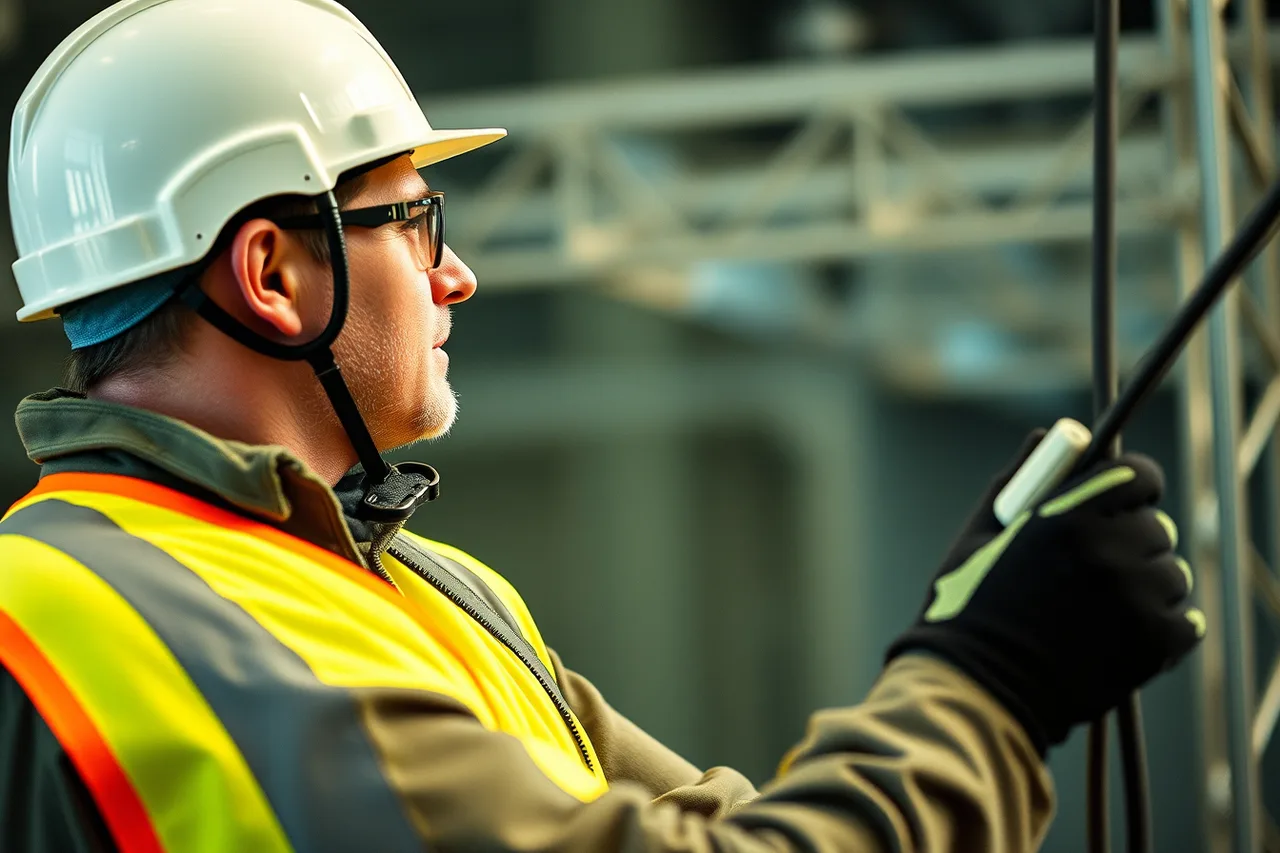
PPE under 1910.132
The PPE general requirements cover event setup and production crews and require employers to assess hazards, provide equipment at no cost to workers, and train each user.
For a conference, that means hard hats and high-visibility vests in rigging and forklift zones, safety glasses for anyone cutting or drilling, gloves for staging and cable work, and hearing protection near generators or loud testing.
PPE event crew costs are modest per unit and significant in aggregate. A 40-person crew across a three-day build can consume several hundred dollars in gloves, glasses and earplugs alone, plus replacement for lost items.
Hard hats from 3M or Honeywell list at $12 to $25. High-vis vests from Radians or ERB run $8 to $20. Safety glasses from 3M cost $5 to $15. Gloves from Mechanix or Wells Lamont run $5 to $15 per pair. Earplugs cost $0.25 to $1 per pair.
The assessment itself is the hidden cost. Someone qualified has to walk the floor, document the hazards and sign the assessment. That is usually a few hours of a safety consultant's time, or a trained staff member's day. A safety consultant bills $75 to $150 per hour.
Exit routes under 1910.36
The exit route design and construction requirements for large conference venues set minimum widths, discharge paths, and rules about keeping routes free of obstruction. The 1910.36 standard is short and worth reading before you approve a floor plan.
Every temporary wall, drape line, registration counter and food station you add can narrow or block a route. Fire marshals enforce this locally, and their review is separate from OSHA's. A fire marshal plan review fee runs $100 to $500.
Budget for a fire watch when a route must be closed temporarily during build. That is a paid human being standing at a door, and it is not optional in most jurisdictions. Fire watch rates run $35 to $75 per hour per person, often with a four-hour minimum.
Fire extinguishers under 1910.157
OSHA 1910.157 fire extinguisher requirements cover placement, mounting, inspection and servicing, and they apply to temporary structures as well as permanent buildings.
Any event with cooking, generators, pyrotechnics or fueling needs extinguishers sized and placed for the hazard. Rental units usually arrive tagged and serviced, but the venue may charge for its own inspection.
Rental units from a local fire equipment company cost $25 to $60 per unit per event. Inspection tags run $10 to $25 per unit.
Monthly and annual inspection records are the venue's responsibility for its own equipment. For rented or temporary units, your vendor should supply the tags, and you should keep copies in the event binder. National servicers such as Cintas and Johnson Controls handle permanent equipment.
A worked example
A 1,200-attendee conference with a 40-person build crew, one general session, six breakouts and an outdoor reception:
- PPE assessment and equipment$75 to $150 per hour for a consultant, plus $600 to $1,500 in consumables for 40 crew across three days.
- Exit route review with the fire marshal$100 to $500 in review fees, plus one plan revision cycle.
- Fire watch for two closed routes during buildtwo staffed positions at $35 to $75 per hour for one shift each, about $280 to $1,200 total.
- Extinguishers for the outdoor cooking stationfour rented units at $25 to $60 each, plus $10 to $25 per tag, about $140 to $340.
- Documentation and copies for the event binder10 to 20 administrative hours at $25 to $50 per hour, about $250 to $1,000.
None of these are large numbers individually. Together they are the difference between a build that runs and a build that stops.
Heat illness, hazard communication and crew training line items
Heat illness prevention has moved from a California and Washington concern to a national budgeting question. Outdoor activations, unairconditioned exhibit halls and summer load-in docks all create exposure.
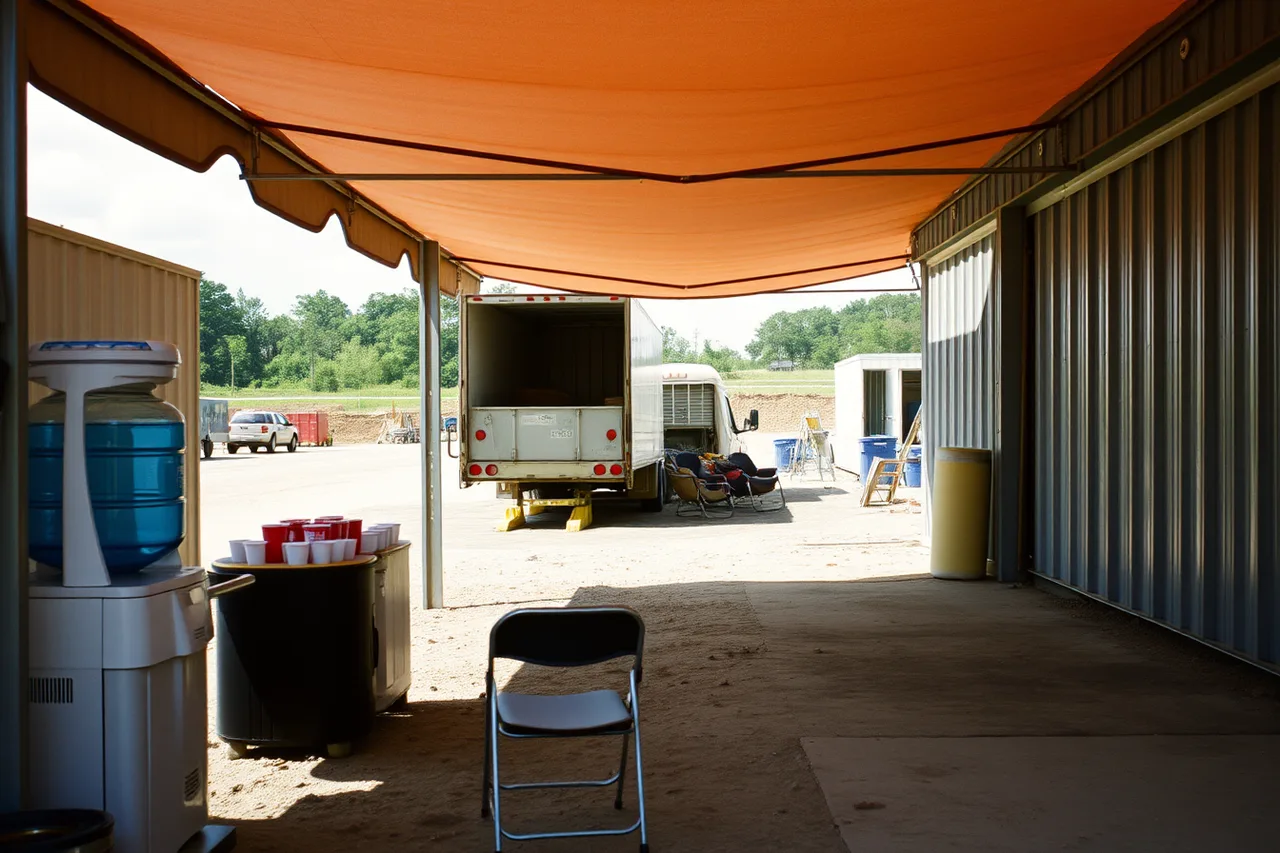
Federal OSHA has no standalone heat standard, but it enforces heat hazards through the General Duty Clause. State Plan states with their own heat rules are stricter and more specific.
The practical budget item is water, shade and rest cycles. For an outdoor build in July, plan on water stations, a shaded break area and scheduled rotations. That is a few hundred dollars and a schedule adjustment, not a major expense.
Water stations cost $50 to $150. A shade tent costs $200 to $600.
The bigger cost is the person empowered to call a stop. Someone on site must be able to halt work when conditions become unsafe, and that authority has to be written into the chain of command.
Hazard communication
Hazard communication requirements apply wherever your crew handles chemicals: cleaning products, adhesives, paints, fog fluid, fuel. Every container needs a label, and every crew member needs access to safety data sheets.
For events, this usually means a binder or a tablet at the production desk with the safety data sheets for everything on site. Collecting them is administrative work, and it is the kind of thing that gets skipped at 2 a.m.
Assign it to a named person during load-in. A single point of contact for safety data sheets prevents the scramble when a venue or inspector asks. A binder costs $20 to $50. SDS management software such as VelocityEHS MSDSonline or SafetyCulture typically runs $50 to $200 per month.
Training line items
Training is where compliance budgets most often understate the real number, because it is measured in hours rather than invoices. A corporate event planning business plan helps you convert those hours into a defensible per-event cost.
Core training for event crews covers hazard recognition, PPE use, exit routes, extinguisher operation, heat illness, and reporting procedures. New hires need it before their first build. Returning staff need refreshers. A two-hour in-person session costs $25 to $75 per person. Online courses run $20 to $50 per person.
Documentation is the deliverable. A sign-in sheet with names, dates and topics is what protects you after an incident, and it costs almost nothing to maintain if the process exists.
For contract labor, confirm that the staffing agency carries its own training obligation. If it does not, you inherit it, and the cost appears as a line item you did not plan for. Budget $25 to $75 per contract worker.
Event Industry Council and MPI guidance on accessibility and safety budgeting
Industry guidance fills the gap between regulation and practice. The Event Industry Council publishes accessibility and safety material aimed at organizers, and Meeting Professionals International runs education and standards work through its chapters and annual meetings.
The Event Industry Council's accessibility work is the more directly useful of the two for budgeting, because it translates ADA language into event-specific checklists covering registration, sessions, exhibits and transportation.
MPI's contribution is largely professional practice: session content, benchmarking conversations and peer review of what other organizers actually spend. That is where you learn whether your accessibility line is generous or thin for a show your size.
Neither body sets legal requirements. Treat both as a way to pressure-test your numbers against what comparable US conferences carry.
Turning guidance into a budget number
A simple method works better than a detailed one nobody maintains. Start with a per-attendee accessibility allowance of $1 to $5 for captioning, interpreters and assistive listening, then adjust by session count.
Add a fixed compliance line of $3,000 to $8,000 for safety labor, PPE and documentation. This line should not scale with attendance, because a 300-person and a 3,000-person build both need a safety lead.
Then add a contingency of 10% to 20% for venue-specific remediation. Older hotels and historic properties are where this gets spent, and it is usually discovered during the site visit.
Where peer benchmarks help
Benchmarking is most useful for training hours and accessibility services, the two categories with the widest variation between organizers. Safety labor and PPE are fairly consistent across US markets.
Ask peers in your MPI chapter what they carry for a show of similar size and format. The answers will vary more than you expect, and the variation usually reflects how recently someone had a bad experience.
Checklist: compliance costs to carry in every US conference budget
Use this as a starting structure and adjust the amounts to your show. The categories should appear in every US conference budget regardless of size or city.
- Safety lead labor for load-in and load-out, priced at a premium rate: $65 to $110 per hour
- Written safety program, reviewed annually$500 to $2,500 to draft, $500 to $1,500 per year to review
- PPE assessment plus consumables for every build crew$75 to $150 per hour for assessment, $600 to $1,500 per 40-person build in consumables
- Crew training hours and documented sign-in records$25 to $75 per person
- Hazard communication binder or tablet with safety data sheets: $20 to $50 for a binder, $50 to $200 per month for software
- Heat illness supplies and scheduled rest cycles for outdoor or hot work: $250 to $750 per event
- Exit route review with the local fire marshal, plus fire watch hours: $100 to $500 review, $35 to $75 per hour for fire watch
- Fire extinguisher rental, servicing and tagging for temporary hazards: $25 to $60 per unit rental, $10 to $25 per tag
- Assistive listening receivers for every breakout room$5 to $15 per receiver per day
- Captioning for general sessions and hybrid streams$100 to $200 per hour
- ASL interpreter hours for advance requests$75 to $150 per hour, two-hour minimum
- Accessible seating dispersed through each roomno added cost
- Accessible transport between overflow hotels$75 to $150 per hour per bus
- Printed and digital materials in accessible formats$0.10 to $0.50 per page extra
- Venue accessibility survey and known-barrier plan on file: $1,500 to $5,000 for a third-party survey
- Incident reporting and documentation hours$25 to $50 per hour
- Contract review for indemnification and ADA cost shifting$250 to $500 per hour for counsel
Two of these deserve a second look every year. The venue accessibility survey and the contract review are the items that most often reveal a cost you did not see coming.
If you are building a team to carry this work, the hiring checklist covers the roles and questions that surface compliance competence before you commit.
Insurance is the backstop for everything on this list. Premiums for event liability and workers compensation vary by state and by claims history, and the insurance cost picture changes with each incident you record.