Guides
Getting more corporate event planning referrals without begging
Referrals for corporate event planners come from four channels, and each one needs a specific ask, a kept record and a reason the client returns.
What to take away
- Four channels produce most corporate event referralsword of mouth, repeat corporate accounts, Maps and local listings, and bringing a past client back for the next cycle.
- Each channel needs its own ask. A general "let us know if you hear of anything" produces nothing.
- Ask at the closeout meeting, not at the proposal stage, and ask the named person who signed the contract.
- Keep a referral log with source, date, event type and outcome. Without it you cannot tell which channel pays.
- Reviews on your Google Business Profile are a referral channel, and the FTC sets rules for how you may ask for them.
Referral work fails when it stays a wish. It works when each channel has a script, an owner and a record. The four sections below give you all three.
Word of mouth: the ask has a shape
Word of mouth is the cheapest channel and the slowest to start. It moves when you ask a specific person for a specific thing at a specific moment.
The word-of-mouth ask
- Closeout meeting after final invoice clears
- Ask the contract signer, not the assistant
- Name the client type you want
- Give a sentence they can repeat
- Tell the referrer when the event books
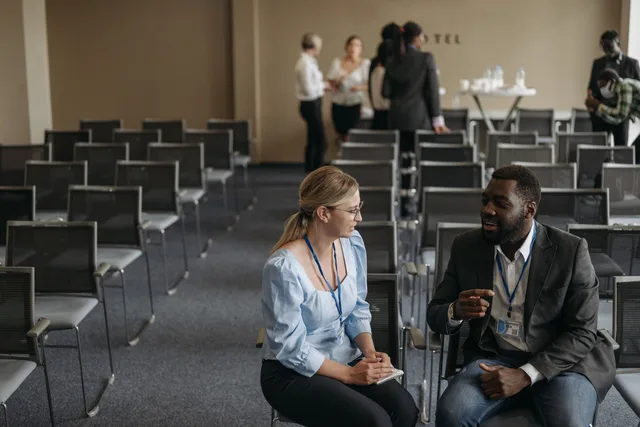
The moment is the closeout meeting, after the final invoice clears and the client has said the event went well. The person is the one who signed the contract, not the assistant who forwarded your emails.
The ask names the kind of client you want. "We do best with 200 to 600 attendee sales kickoffs in the Midwest. If someone on your team moves to a company planning one, an introduction to that person is worth more to us than a public post."
That sentence works because it tells the client what to listen for. A client who does not know your target cannot spot it.
Then close the loop. When the introduction lands, tell the referring client the event booked. People repeat the favor when they see it counted.
Repeat corporate accounts: the calendar does the asking
Most corporate event work repeats on a cycle. Annual sales meetings, quarterly leadership offsites, user conferences and training weeks all come back.
Repeat account contact cycle
- Last deliveryNote the date you delivered
- One quarter beforeCall the client
- SignatureTrack days from outreach
- MonthlyReview repeat booking share
Build a calendar of every past client's known cycle and contact them one quarter before the date you delivered last time. That call is a service, not a pitch. You already know their room block pattern, their AV needs and the two suppliers they disliked.
Two numbers tell you whether this channel is working: the share of last year's clients who booked again, and the average days between your outreach and their signature. Track both monthly.
If repeat bookings fall, check whether the account lead changed jobs. A new marketing director inherits no memory of your event. Reintroduce the work with the final report and the attendee numbers.
Maps and local listings: reviews are a channel
A planner searching "corporate event planning [city]" sees the map pack before the organic results. Google states that local ranking rests on relevance, distance and prominence, and that complete business information, current hours, reviews and photos all feed it. Complete your profile and keep it current. See Google Business Profile Help: Tips to improve your local ranking on Google.
Local listing and review rules
- Complete the business profile
- Keep hours and photos current
- Ask at the closeout meeting
- Ask the contract signer
- Never offer a discount or gift
Ask for a review at the same closeout meeting, from the same person.
The FTC's guide for marketers says review requests should go to genuine customers without picking only the ones likely to answer well, and that incentives or paid placement must not create a false picture.
Read the full guidance at U.S. Federal Trade Commission: Soliciting and Paying for Online Reviews: A Guide for Marketers.
One rule keeps this channel clean: never offer a discount, a gift or a future favor in exchange for a review. It breaks the FTC guidance and it reads as bought.
Bringing the corporate client back
The fourth channel is the client you already have. It costs less to win the next event than to find a new account, and you hold information no competitor has.
Post-event reconciliation walkthrough
- Per-attendee F&B spend vs minimum
- AV and rigging line items
- Room-block pickup vs attrition clause
- Resort fees on the master account
- What you would change next year
Bring the client back by handing them the post-event reconciliation in person. Walk through the per-attendee food and beverage spend against the minimum, the AV and rigging line items, the room-block pickup against the attrition clause, and the resort fees that landed on the master account. Then show what you would change next year.
That meeting does three things at once. It proves you watch their money, it surfaces the budget for the next cycle, and it gives you the date to call back. It also earns the introduction described above, because the client now knows exactly how you work.
If you want the longer version of how these four channels feed a pipeline, the account-by-account approach is set out in how to win more corporate event planning clients in 2027.
The referral log
Keep one row per referral. Six columns are enough.
| Column | What goes in it |
|---|
Referral log columns
- Date the referral arrived
- Source person and channel
- Event type
- Estimated value
- Outcome
- Date you thanked the referrer
Review the log monthly. Count referrals by channel and divide booked events by referrals received. That ratio tells you which channel deserves more of your asking time.
Common questions
When should I ask a client for a referral?
At the closeout meeting, after the final invoice clears and the client has confirmed the event went well. Asking earlier puts the request ahead of the proof. Ask the person who signed the contract, and name the kind of client you want so they know what to listen for.
Can I offer a discount for a Google review?
No. The FTC's guidance for marketers says incentives must not create a false or misleading picture, and review requests should go to genuine customers without selecting only likely positive responders. Thank the client, log the review, and leave payment out of it.
How do I get a past corporate client to book again?
Call one quarter before the date you delivered last time, and bring the post-event reconciliation. Walk through food and beverage spend, AV and rigging, room-block pickup and resort fees, then show what you would change. That conversation sets the next budget and the next date.
What is the fastest referral channel to start?
Repeat corporate accounts, because you already hold the client's event history and cycle. Word of mouth takes longer to build but costs nothing. Maps and listings compound slowly through reviews, and bringing a client back depends on the reconciliation meeting happening at all.